
Beyond Survival: Women’s Healthcare
Should Women's Health Mean More Than Not Dying?
Global health has rightly celebrated one of its greatest achievements: fewer women are dying during pregnancy and childbirth. Access to modern contraception has helped millions of women avoid unintended pregnancies, space births safely, pursue education, and participate more fully in economic life. Few would argue that these gains are anything other than remarkable.
But what if our definition of success has become too narrow? What if, in our determination to keep women alive, we have stopped asking whether they actually feel well?
This is the kind of difficult yet critical question that the CARE programme of Critical Conversations exists to explore.Across much of sub-Saharan Africa, maternal mortality remains an urgent public health challenge. We know that spacing births saves lives. Preventing unintended pregnancies reduces obstetric complications and allows women greater opportunity to care for themselves and their families. These realities are well established, and they matter enormously.
Meanwhile there is another reality that receives far less attention and contributes to lower uptake of contraception. Many women who take contraception report persistent fatigue; bloating, weight gain, mood changes, headaches, or simply no longer feeling like themselves. For some, these symptoms are mild and transient; for many they are unpleasant and persistent but tolerated; and for others, they become significant enough to discontinue treatment or switch methods. These experiences are often dismissed but health workers.
If a woman is alive but chronically exhausted, emotionally flat, or struggling with symptoms that make everyday life harder than it already is, has the public health system truly been successful? The question is not whether contraception can save lives or reduce unintended pregnancies: it can and it does. Our question is whether it's ok to make women endure the side effects of contraception. Is it ok that women are expected to tolerate another biological burden- yet again?
The Menstrual Cycle: More Than Monthly Bleeding
Women's bodies are remarkably intelligent. Naturopathic physician Dr Lara Briden popularised the idea that the natural menstrual cycle acts as a woman's "monthly health report card": a reflection of nutrition, stress, thyroid function, metabolic health and hormonal balance. When ovulation occurs regularly, the cycle provides valuable information about what is happening throughout the body. Mainstream medicine and the American College of Obstetricians and Gynecologists echoes this principle, recommending that clinicians consider the menstrual cycle a "vital sign", recognising that a healthy regular menstrual cycle is a good thing and that its nature can provide important clues about a woman’s underlying health status.
Hormonal contraceptives work, in part, by suppressing ovulation. No progesterone is produced. The monthly bleed experienced with many contraceptive pills is not the same as a natural menstrual period but a withdrawal bleed resulting from changes in synthetic hormone exposure. This is not a monthly report card.
This does not make hormonal contraception inherently harmful: for many women, the benefits far outweigh the side effects or the risk of pregnancy. Hormonal contraception temporarily replaces the body's natural intricate hormonal rhythms with crude high hormone dose silencing the intricacies of a woman's reproductive health - it can come with trade-offs for the individual woman.
Listening to the Body We Are Still Learning to Understand
One of the most exciting frontiers in medicine is the microbiome: the vast ecosystem of bacteria, fungi and other microorganisms that inhabit our gut and reproductive tract.
Scientists increasingly recognise that these microbial communities influence immunity, inflammation, metabolism, mood and reproductive health. Research is revealing intricate communication between the gut microbiota, sex hormones and the female reproductive system, although many questions remain unanswered.
Many studies suggest hormonal changes, particularly those associated with contraceptive use, influence both gut and vaginal microbial communities. There is no question that reproductive hormones and the microbiome are intimately connected. Although scientists continue to investigate exactly how these interactions influence different women, the days of viewing reproductive hormones as acting only on the ovaries and uterus are over. For decades, medicine treated hormonal contraception primarily as a somewhat crude reproductive technology.
We are only now beginning to understand that reproductive hormones regulate far more than fertility. They shape immune function, metabolism, inflammation and the ecology of both the gut and vaginal microbiomes. Emerging evidence suggests that altering these hormonal signals may have broader consequences for women's everyday health than were appreciated when these drugs were first developed.
The growing body of microbiome research raises an important question: could some of the symptoms many women who use contraception have reported for decades like bloating, digestive disturbance, fatigue, altered mood and recurrent vaginal infections; reflect biological changes that science is only now beginning to understand? What we cannot yet say is that hormonal contraception directly causes widespread microbiome dysfunction or explains every woman's symptoms. But the emerging evidence should not be ignored. When women repeatedly describe fatigue, bloating, altered mood or changes in wellbeing when on hormonal contraception, they deserve curiosity and not dismissal.
Women and their complex biological systems are being asked to not only manage menarche and menstruation and pregnancy and perimenopause and menopause: but also the side effects of contraception. Women's bodies and their symptoms are not inconveniences to be managed - they require an interconnected and holistic approach which is unlikely in resource deprived settings like Kenya.
Conversations Happening Outside the Clinic
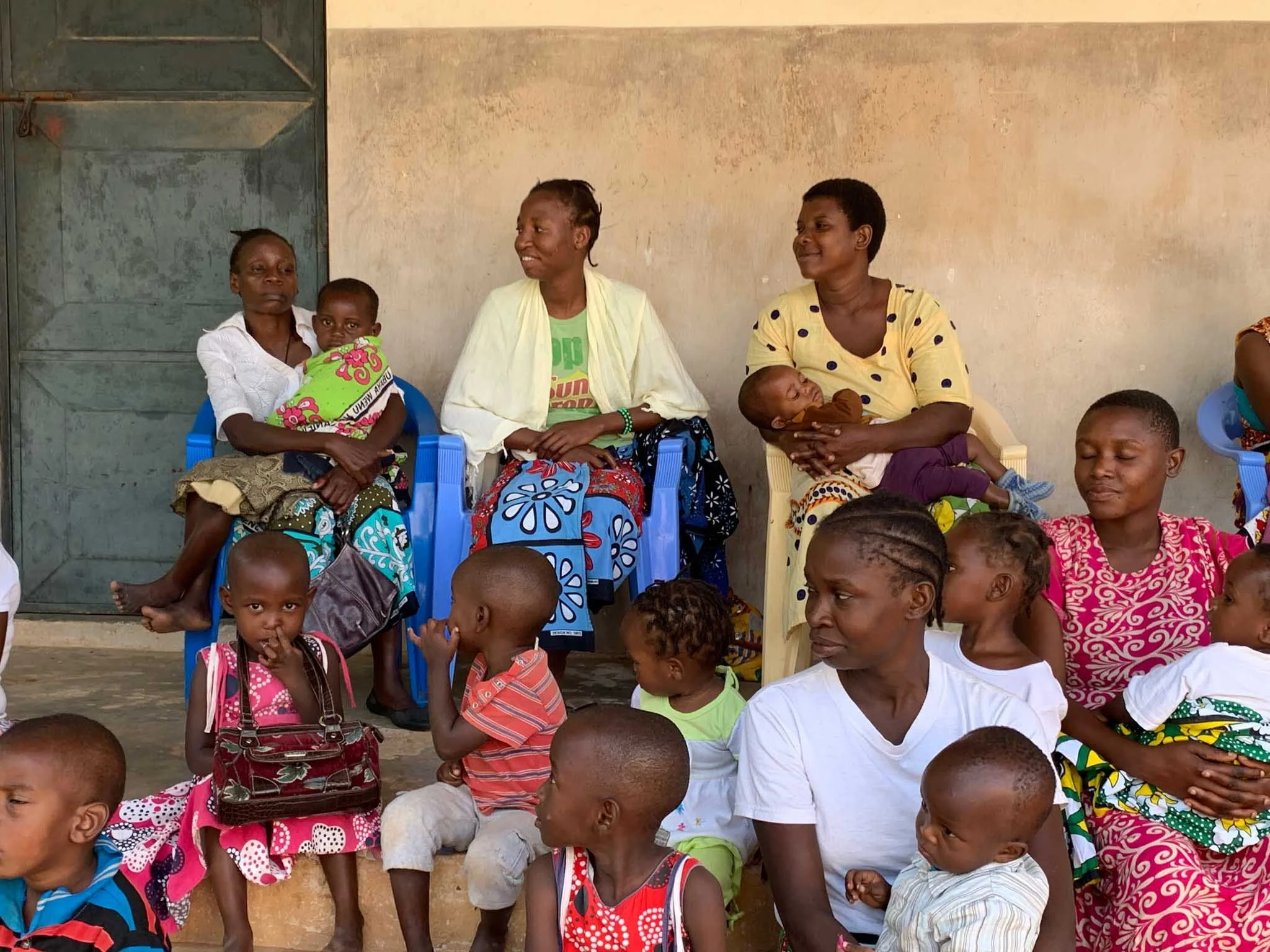
Health workers, when confronted with the devastating consequences of teenage pregnancies, repeated unspaced pregnancies, or post hemorrhage anemia, maternal depletion and unsafe abortions, will correctly recommend contraception. But, if you have ever spent any time sitting beneath a tree in a Kenyan village, outside a dispensary or after a church Sunday service, you will have overheard the stories that women are telling. They ask one another which contraceptive methods don't cause headaches or spotting or weight gain, which ones affect mood, as they speak about the ones they have abandoned because they simply could no longer tolerate them and this contributes to low uptake.
Why Does the Burden Still Fall Mostly on Women? The most critical and uncomfortable question is not about hormones at all: it's about men.
Across much of sub-Saharan Africa, while women continue to shoulder the physical consequences of repeated pregnancies and the biological burden of contraception; reproductive decision-making remains heavily influenced by men. Patriarchal norms typically limit women's autonomy, and so many women will either secretly use contraception and endure the side-effects or will not use contraception and will tolerate multiple unspaced pregnancies.They’re caught between a stone and a hard place!
Yet condoms remain one of the safest, cheapest and most accessible contraceptive methods available. They involve no hormonal changes, no metabolic side-effects and provide protection against sexually transmitted infections. Research across Africa shows that male attitudes, social norms and misconceptions continue to shape contraceptive use, and the responsibility for preventing or spacing pregnancies continues to rest disproportionately with women.
There is some growing evidence that meaningful male engagement sometimes works. Things like male peer networks, male-friendly reproductive health services, joint clinic attendance and conversations framed around the economics of family size all increase men's participation in family planning - but the impact is so small and family planning still remains women's work alone often without the support of a man.
CARE: Creating Space for Better Questions

Our CARE programme does not tell women or men what choices they should make. Our programme also does not undermine the place of hormonal contraception as an important public health initiative. We celebrate contraception's extraordinary contribution to reducing maternal deaths and early pregnancies while also listening carefully when women tell us they do not feel well when they take contraception and we do not brush them aside.
We ask the difficult questions about why men shoulder so much less responsibility physically or emotionally for reproduction or family planning. We ask how we can create a system where men and women actually understand the intricacies of a woman's body and cycle, and where women and men receive genuine informed counselling that includes the side effects and alternatives.
We aspire to a time when boys are raised to carry an equal or even greater share of reproductive responsibility and enthusiastically wear condoms as a way of taking responsibility for their own health and the health of the women who will bear the future generations!
Here at Critical Conversations we have the courage to ask the hard questions.
(Monique Oliff)
References
Briden L. Period Repair Manual. 3rd ed. Greenpeak Publishing.
American College of Obstetricians and Gynecologists. Menstruation in Girls and Adolescents: Using the Menstrual Cycle as a Vital Sign. Committee Opinion No. 651.
World Health Organization. Contraceptive Use: A Catalyst for Women's Health and Socioeconomic Empowerment. 2025.
Chadchan SB, Singh V, Kommagani R. Female reproductive dysfunction and the gut microbiota. Journal of Molecular Endocrinology. 2022;69(3):81–94.
Ashonibare VJ, Akorede BA, Ashonibare PJ, et al. Gut microbiota–gonadal axis: the impact of gut microbiota on reproductive functions. Frontiers in Immunology. 2024.
Peters BA, Santoro N, Kaplan RC, Qi Q. Spotlight on the gut microbiome in menopause: current insights. International Journal of Women's Health. 2022.
If you would like to receive occasional news and updates from the Critical Conversations team, leave your name and email address below.
We promise to respect your inbox!