
Eco-theology of Our Time
For Everything There Is a Season
"For everything there is a season; and a time for every matter under heaven." Ecclesiastes 3:1
We have reached a moment in history when humanity is being invited to pause; to observe; and to ask whether the path we are following still leads towards life because if we look around us - the pattern of everyday life no longer has features of untouched creation. The land is exhausted and the people are lost and they have lost sight of the relationship between their own lives and the flourishing of God’s creation.
Across the world we are witnessing rising temperatures; declining biodiversity; polluted rivers; rapidly disappearing forests; and totally unpredictable weather. Communities that have contributed least to these changes are bearing their greatest burden. These are the communities where we work, and they are experiencing failed harvests; pressure on land; youth unemployment; food insecurity - this is now part of daily life.
Ecotheology asks what our relationship with God teaches us about our relationship with nature. In the opening chapters of Genesis, when creation unfolds, there is rhythm; balance; and purpose - light and darkness; sea and land; plants and animals; each with its appointed place. Humanity is placed as its caretaker.
The command given in Genesis has often been misunderstood as permission to dominate the earth. Yet the Hebrew language reveals that humanity was called to cultivate and to keep the garden,more like a gardener; or a shepherd. The instructions were to care rather than exploit; to take responsibility without entitlement.
When Christians speak of stewardship; it is sometimes reduced to recycling; tree planting; or reducing waste. But stewardship starts with recognising that everything ultimately belongs to God; the land; the animals; the waters; our own bodies; and even the children entrusted to our care. Nothing belongs to us.
"The earth is the Lord's; and everything in it." Psalm 24:1
If the Earth belongs to God; then those of us passing through are not supposed to maximise what we extract from it. The communities where we have worked have not taken more than their small share - it’s just that there are now many people taking a small share. Whilst in wealthier people are taking far more than their fair share.
The Wisdom of Limits
Modern society celebrates endless consumption and endless growth. In this world, we measure success through continual expansion; larger economies; increasing population, increasing consumption; bigger cities; and more production. Growth itself is deemed a virtue.
In the Christian scripture, there are limits or rules that try to put in place restrictions, as a form of wisdom:
The seventh day of the week is set apart for rest. In the seventh year there is no harvest to allow the land to recover for a whole year. In the Jubilee every 50 years relationships are restored, debts are cancelled and land is returned to any family who had fallen into poverty, any accumulated wealth is redistributed so as to prevent wealth being concentrated in the hands of the super rich or elite. Farmers are instructed not to harvest every corner of their fields; leaving enough for the poor and the stranger. Even the manna (daily bread) in the wilderness could not be hoarded without consequence (if hoarded the bread would rot). Again and again; God teaches that abundance and consumption without restraint eventually becomes destruction.That we must abide by the rules of Creation, structured around cycles; seasons; renewal; and rest.
This biblical vision stands in sharp contrast to a culture that often assumes that every resource exists simply to satisfy human desire. It also challenges the assumption that every form of growth is inherently good. The Bible repeatedly states that flourishing is not achieved through accumulation, but through discernment, moderation, gratitude, and respect for creation.
This is expressed most profoundly in Ecclesiastes: for everything there is a season; every activity under heaven has its proper time. There is a season for planting; and a season for harvesting. A season for building; and a season for refraining. The beauty of creation lies not in endless expansion; but in recognising the appropriate time for every action.
Today, humanity now consumes natural resources faster than ecosystems can regenerate them. Species disappear at unprecedented rates. Fresh water is becoming increasingly scarce and wasted on google and AI prompts. Soils are degraded with fertilizers and are unable to recover. Forests that once regulated rainfall and supported extraordinary biodiversity shrink to create single use packaging. Much of humanity has forgotten that creation was designed with limits. Yet people living in the poorest communities are simply looking for a few litres of water and a bundle of firewood.
Children; Blessing and Responsibility
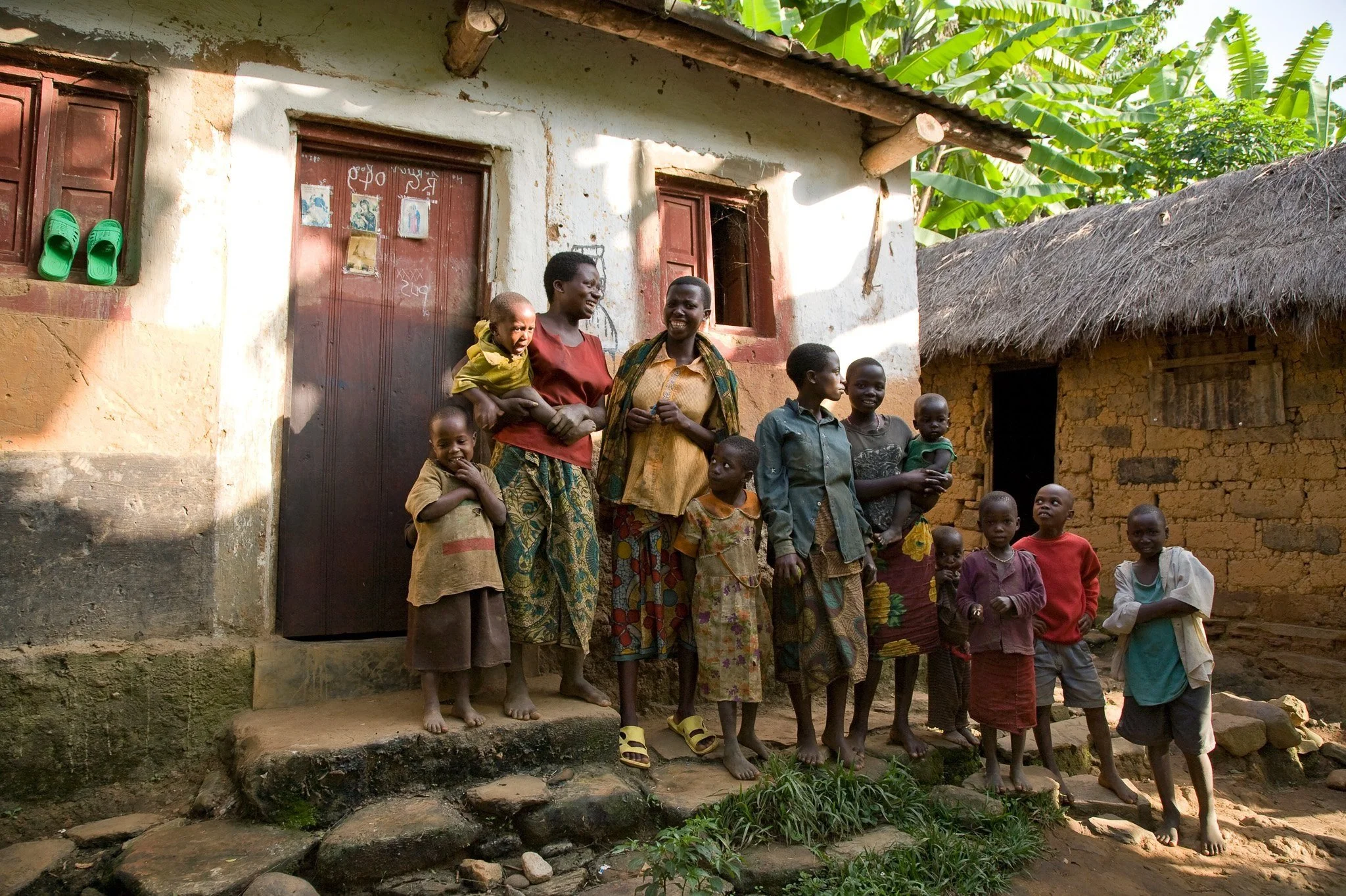

Few subjects are more sensitive than the number of children we should birth. Throughout Scripture; children are consistently described as blessings from God. They represent hope; continuity; inheritance; and joy.
Jesus himself welcomed children; placing them at the very centre of the Kingdom, which is where they are placed in most African communities! Yet blessing carries responsibility. These children can only be celebrated if the conditions that allow them to flourish are intact.
Each child deserves clean flowing, bubbling, living water; nutritious food from soil that is alive; healthy ecosystems; stable safe communities; and the opportunity to experience the beauty of creation - nature. We did not put the forests; rivers, grasslands, and fertile soils upon which future generations depend, into trust, where they could not be touched by the greedy today. We cannot care for tomorrow’s children if today's children are hungry. How then do we ensure that every future child born into our communities can flourish, when weather and economic conditions make it almost impossible?
Within many Christian communities; conversations about family size have often been framed almost exclusively around personal morality. Much less attention has been given to the wider context in which families live; the availability of land; economic opportunity; maternal health; ecological pressures; or the long term wellbeing of children themselves.
The bible always considers consequences beyond the present moment. The prophets challenge any leaders who pursue immediate gain while leaving future generations to inherit injustice and desolation. True stewardship asks not only what we are free to do today; but what kind of world our actions will leave for those who come after us.
Our ecotheology invites Christian pastors living in or around conservances to recognise that a small family size is the only way available to address the current devastation - the only way to protect current and future generations of children while caring for creation (nature).
Faithful Stewardship in Conservancies
Across Africa and Kenya, the Christian faith remains one of the most powerful influences shaping values, relationships, and community life. Churches are often present long before governments arrive and remain long after development projects have ended. Pastors baptise children; counsel young couples; comfort families during times of grief; and guide communities through uncertainty. They are trusted voices whose words often carry greater authority than public policy or scientific reports.
Young people are asking how to navigate relationships; how to care for their mental wellbeing; how to understand their bodies; how to prepare for parenthood; how to find meaningful work; and how to build hopeful lives within communities as they experience increasing pressure on land, livelihoods, and natural resources. The Bible encourages people to seek understanding before action; to listen before speaking; and to consider the consequences of today's decisions for tomorrow's generations.
Pastoral leadership means helping young people to discuss family size within the context of the planetary pressures. The Church celebrates every child as a miracle and a gift and asks whether parents have the resources for the child to flourish. Jesus himself encouraged his followers to count the cost before beginning to build. This principle applies not only to buildings but to starting a family!
Difficult Conversations as an Expression of Love
Some subjects are so sensitive that they are often avoided altogether. Family size quickly becomes polarising. Jesus never avoided difficult conversations. He approached them with humility, wisdom, and deep respect for those before him. He listened carefully. He asked questions. He invited reflection rather than condemnation.
Creating spaces where young people can explore family size in the context of the pressures on the land - is pastoral care. When young people are equipped with accurate knowledge, supported by trusted adults, and encouraged to reflect prayerfully on the future they hope to build, they are better able to make every choice count.
A Season for Courage
Christian hope is often misunderstood as passive optimism; the belief that everything will be ok if we just hand over to God and pray! We know this is not the case - we need to look around us and see that despite the prayers, things are not ok! Perhaps this is the season to which Ecclesiastes points. A season to move beyond fear. A season to replace division with dialogue. A season to recognise that caring for the earth and caring for future children are expressions of the same command to love our neighbour as ourself. Every generation receives the earth as a sacred trust. Every generation decides what it will leave behind.
Cultivating Faithful Stewardship

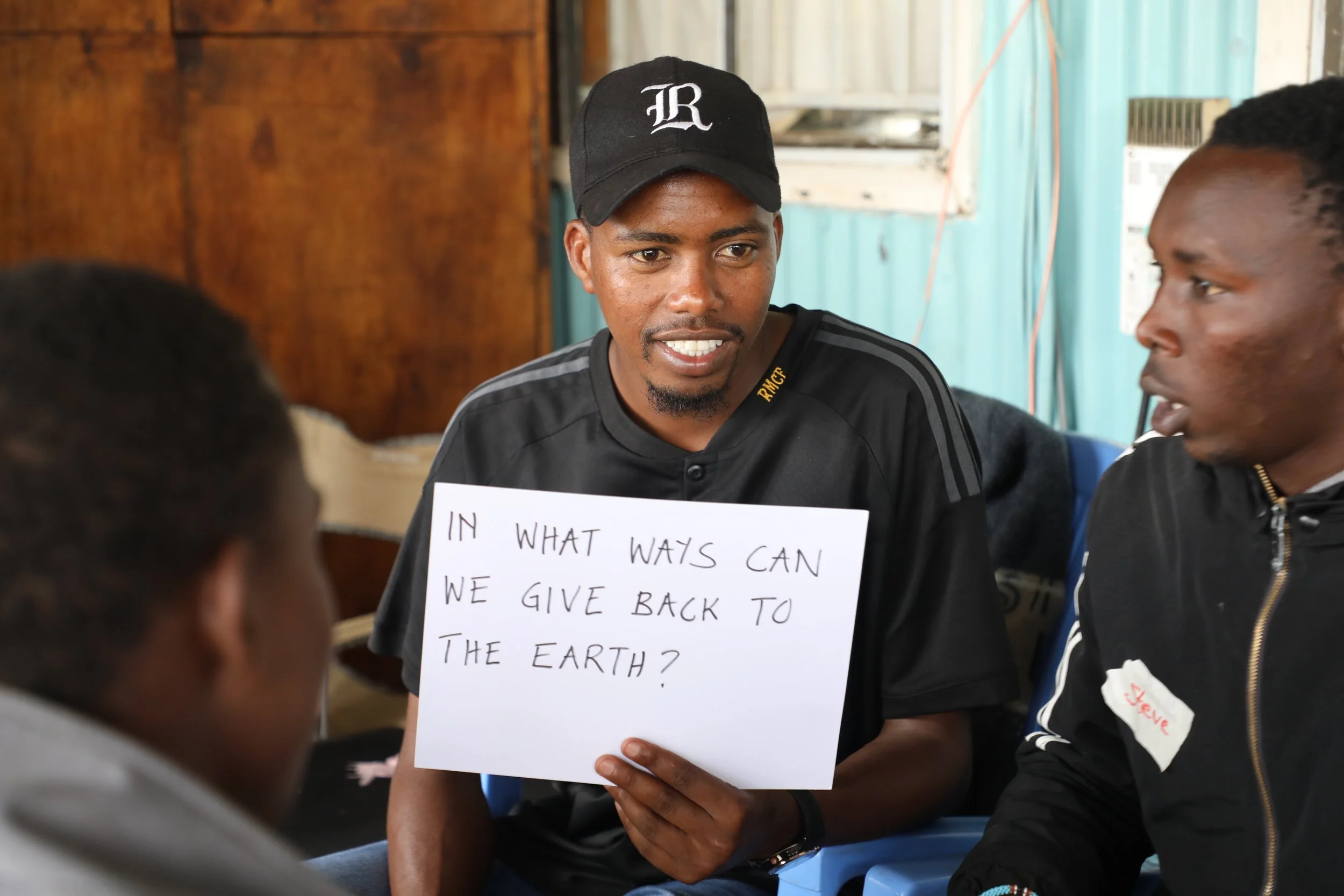
At Critical Conversations, we believe trusted leaders have a vital role to play in helping youth navigate the defining challenges of their time. Through our CULTIVATE programme, we bring together pastors with pastors, faith leaders with their peers, community elders, conservancy managers, teachers, government officials, and other respected voices. We immerse them in nature and give them the tools to reflect deeply on the stories of our time.
For the groups of pastors our programme is grounded in Scripture, informed by science and enveloped in Nature! Our CULTIVATE programme equips leaders to ask difficult questions and engage in difficult conversations with wisdom and compassion. Participants explore how biblical teaching speaks to creation care, healthy families, youth wellbeing, ecological responsibility, interconnectivity, enabling them to steward the youth as they navigate decisions around family size, consumption and the natural world upon which all life depends.
(Monique Oliff)
References
Laudato Si'. Pope Francis. 2015. On Care for Our Common Home.
The Care of Creation. Richard J. Bauckham. 2010.
For the Beauty of the Earth. Steven Bouma Prediger. 2010.
The Green Bible. 2008.
The Season of Creation. World Council of Churches.
The Bible and Ecology. Richard Bauckham.
John Ray Initiative. Resources on creation care and biblical stewardship.
Conradie, E. M. (2006). Christianity and Ecological Theology: Resources for Further Research. This remains one of the most comprehensive scholarly overviews of ecotheology and its development across Christian traditions.
Deane Drummond, C. (2017). A Primer in Ecotheology: Theology for a Fragile Earth. A widely respected introduction exploring the relationship between Christian theology and contemporary ecological challenges.
If you would like to receive occasional news and updates from the Critical Conversations team, leave your name and email address below.
We promise to respect your inbox!