
The Role of Theater in Sparking Dialogue
“The plain fact is that the planet does not need more successful people. But it does desperately need more peacemakers, healers, restorers, storytellers and lovers of every kind. It needs people who live well in their places."
- David Orr
Across Kenya, young people are growing up in a world changing at a disorienting pace. Seasons and weather patterns are shifting as droughts and floods become more frequent, biodiversity continues to decline and communities find themselves adapting to realities that would have been unimaginable only a few decades ago. According to the Living Planet Report 2024, monitored wildlife populations in Africa have declined by an average of 76 per cent since 1970.
Society is changing just as rapidly. Social media and technology expose youth to an endless stream of ideas, expectations and distractions. Some of these open new possibilities, while most fuel comparison, anxiety and the pursuit of consumption-focused lifestyles that remain beyond reach. Alongside this are difficult questions about employment, relationships, parenthood, land, identity and purpose, with most of our young people feeling lost as they stand at the crossroads of multiple futures.
Government and NGO programmes often address unemployment, conservation, livelihoods or reproductive health as though each exists vertically and in isolation. But the world does not work like this - we all know that reality is far more complex. Ecological degradation affects livelihoods; economic insecurity influences family decisions; social change reshapes identity; mental wellbeing is closely linked to hope and belonging or the lack of it. We are interconnected and the issues we face are interconnected and therefore the responses must be equally interconnected.
At Critical Conversations we know that young people don’t need more information - the world is drowning in information. They need the conditions and the opportunities to think deeply, to ask difficult questions, to imagine different possibilities and to discover their own voice.
Although theatre is one of the most visible parts of our CREATE programme, it is only one of the tools we use. The work is really about nurturing curiosity, confidence and imagination and helping young people discover that they are not passive observers of the world around them, but active participants in shaping it. Theatre, storytelling and the creative arts provide a safe and fun and engaging way of making that journey possible.
Long before destructive colonial education systems arrived, knowledge and values were carried in stories and proverbs, around evening fires in the cool of the night, or beneath the shade of trees, in the heat of the day.
Storytelling has been one of Africa's oldest forms of education: helping communities make sense of change, strengthening the flow of messaging between generations and reminding people of their responsibilities to one another and to the natural world.
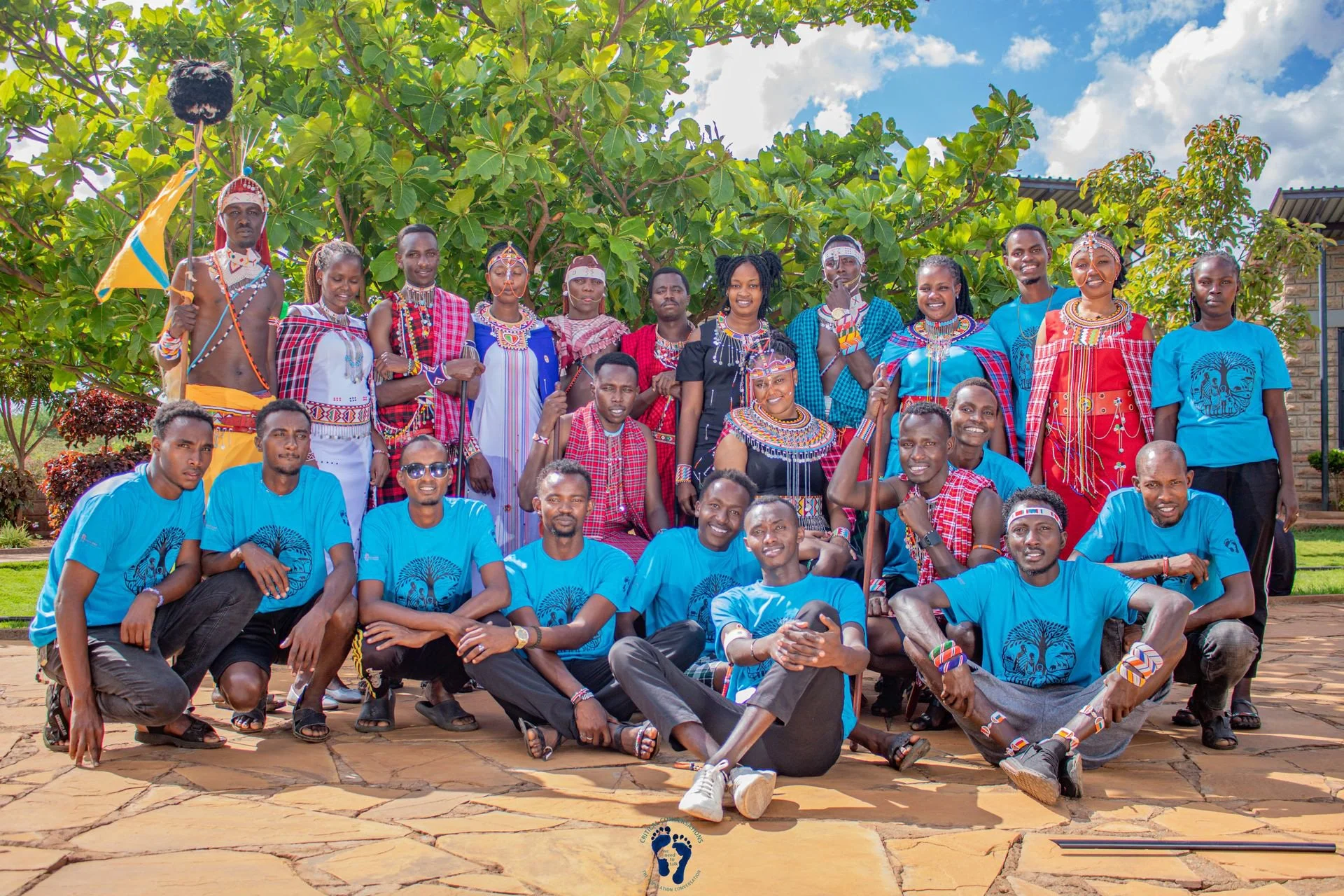
In our work, stories allow young people to approach the difficult realities facing them without immediately placing themselves at the centre of them. One can explore the choices of a character before reflecting on one’s own. One can question assumptions without feeling personally criticised.
This understanding is echoed in the work of the Brazilian pedagogist Paulo Freire, who argued that education should not be about transferring knowledge from those who know to those who do not. Instead, education should create opportunities for people to reflect critically on their own lives and act upon what they discover. Augusto Boal took this thinking one step further through his Theatre of the Oppressed, describing theatre as a rehearsal for reality. Rather than sitting passively and watching someone else's story unfold, people become active participants on the communal stage, exploring choices, consequences and possibilities. It is these ideas that shape our own thinking about the role of stories and theatre within our CREATE programme.
One of the greatest strengths of storytelling and even theatre, as a tool in our work, is that it creates safety: first as a safe space to be and secondly as a way to create a safe distance from the conversations that can feel uncomfortable or even threatening. Our young people begin by creating characters through script writing, then getting to know those characters, understanding the pressures they face and exploring the consequences of the decisions they make or don’t make. It is often much easier to discuss sensitive issues when they belong to someone else (first)! This helps because many of the issues facing young people today are not easy to discuss. Population growth, environmental degradation, reproductive health, livelihoods, consumption, mental wellbeing and expectations, conversations that communities that we all avoid.
Within CREATE, groups of young people support the writing of play scripts. Group work shapes the characters, further develops the stories and then performs them within their own communities. The performances themselves are only one part of the journey. Often the most meaningful moments happen afterwards, when the audience begins asking questions and the young performers facilitate conversations that continue long after the final scene. No one is ever told what to think. Instead, people are invited to think together, to question together and, sometimes, to imagine together.
Because the stories are written besides the young people themselves, they emerge from lived experience rather than imported narratives. The stories are ‘home grown’ and so are the ‘critical conversations.’ The stories speak about changing landscapes, the lost art of understanding wildlife, family relationships, aspirations, traditions and the realities of growing up in places that are more and more lost each day, where both people and nature are under increasing pressure. Through this creative process, young people begin to ‘find their way’ and to recognise the connections between ecological health, social and family wellbeing and economic opportunity in ways that no classroom lessons or workshops could achieve.
Increasingly, research demonstrates that participation in the creative arts builds confidence, resilience, self-efficacy and the active form of hope. Creativity allows people to process uncertainty, imagine alternatives and strengthen the belief that their actions matter. In a world where young people are feeling powerless, imagination is not a nice to have artistic exercise, it is a rehearsal for a different - hopefully, more hopeful future.
Hope, however, is often misunderstood. Hope is not pretending everything will be fine. Nor is it ignoring the realities of climate change, biodiversity loss or growing inequality. The kind of hope we seek to cultivate is rooted in action. It is the belief that our choices still matter and that the stories we tell ourselves or get behind influence the futures we create.
Not every young person who participates in our CREATE programme becomes an actor. Some will discover a love for performance, as a star character or in the chorus, while others will become facilitators, or help behind the scenes. All of them will become their unique kind of community leader who has the confidence to ask thoughtful questions, the ability to listen well, the courage to engage respectfully with different perspectives and the conviction we all matter and we are all interconnected.
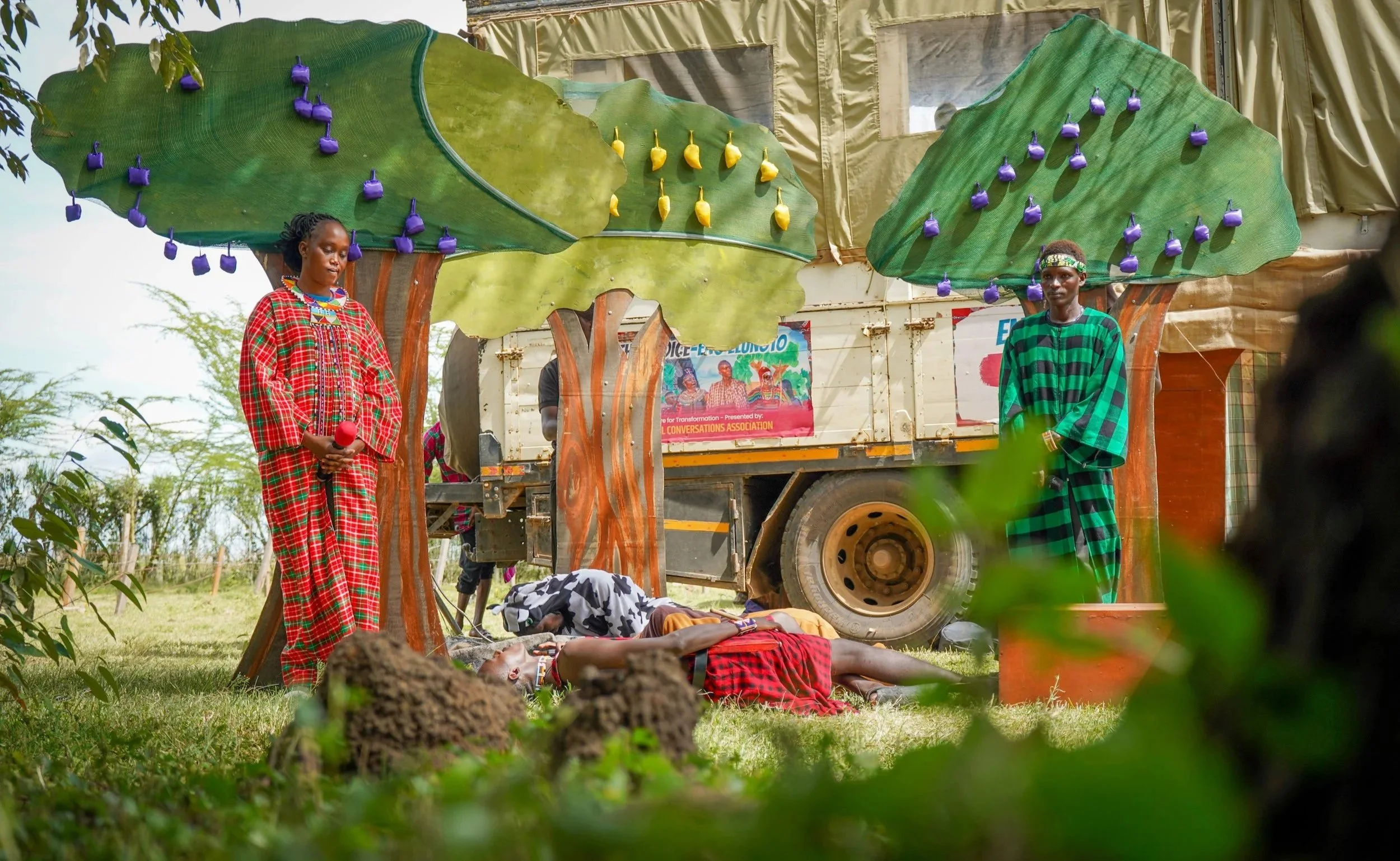
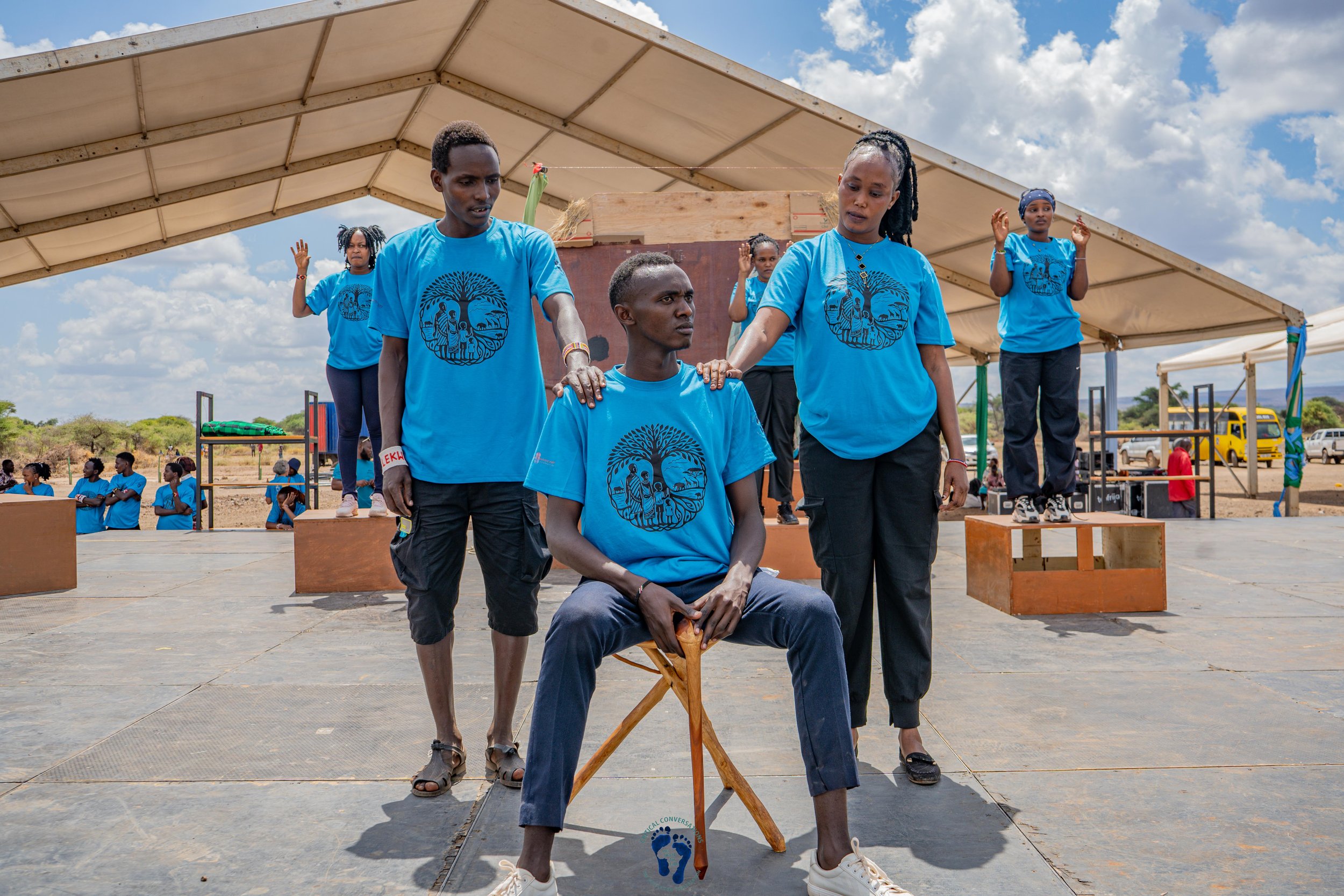
There is another reason why theatre is such a powerful tool for young people. Increasingly, neuroscience is helping us understand that the brain does not always distinguish sharply between real life and vividly imagined experiences of life. When young people repeatedly rehearse a role, speak words of courage, solve problems or make wise decisions on stage in character, they are not simply pretending. They are strengthening neural pathways associated with confidence, empathy, communication and self-belief.
In many African cultures, stories have carried the power to shape reality, identity and community. Theatre draws on this rich heritage by allowing young people to embody the future they hope to create so that they can step into it, because imagination, intention and action were aligned. In this sense, our CREATE programme is not asking young people to manifest an impossible future, but to rehearse one that is rooted in their rediscovered values of integrity, ubuntu, deep ecology, communal responsibility and 7th generational thinking.
Ultimately, CREATE is about helping young people become authors of the stories they want to tell about themselves, their communities and the land and natural world upon which all life depends. Before they step onto the stage of life, they have already rewritten and rehearsed what they believe is possible - what an amazing act of creation for a young person.
(Monique Oliff)
If you would like to receive occasional news and updates from the Critical Conversations team, leave your name and email address below.
We promise to respect your inbox!